Dehumidifier Size Calculator
Find the right dehumidifier capacity (pints per day) for your space by entering your room and moisture details below.
List of the Best Dehumidifier:
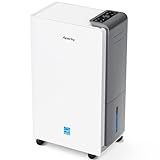


Understanding Dehumidifier Sizing
Excess indoor humidity is more than just an inconvenience—it is a serious threat to your home and your health. High humidity encourages mold and mildew growth, attracts dust mites, warps wood flooring and furniture, and creates a clammy, uncomfortable environment. In basements and crawl spaces, persistent moisture can rot structural framing and cause expensive damage. A properly sized dehumidifier removes moisture from the air and keeps your space dry, healthy, and protected.
Dehumidifier capacity is measured in pints per day (PPD)—the amount of water the unit can remove from the air in a 24-hour period under standardized conditions. Unlike humidifiers, which add moisture, dehumidifiers extract it, and the sizing logic is different. You need to account not only for the volume of air in the room but also for the rate at which moisture enters the space—through leaks, seepage, damp foundations, cooking, showers, and outdoor air infiltration. This guide explains how to calculate the right pint capacity for your space, how temperature affects performance, and how to choose a dehumidifier that will keep your home dry without wasting energy.
Why Dehumidifier Size Matters
An undersized dehumidifier will run constantly, never reaching your target humidity, and will likely burn out its compressor prematurely. In a damp basement, a small unit may fill its tank several times a day while the space remains musty and damp. It will also consume more energy than a properly sized unit running intermittently, because it never gets ahead of the moisture load.
An oversized dehumidifier, on the other hand, will cycle on and off frequently, which is inefficient and can shorten the compressor's life. It may also dry the air too quickly, causing rapid temperature swings and potentially over-drying the space. In a closed room, an oversized unit may satisfy the humidistat before it has had time to run efficiently, leading to short cycling. The goal is to match the dehumidifier's capacity to the actual moisture load of the space.
It is important to note that dehumidifier pint ratings are measured at specific conditions—typically 80°F and 60% relative humidity (the AHAM standard). In a cool basement at 65°F, a 50-pint dehumidifier may only remove 30 to 35 pints per day, because cold air holds less moisture and the compressor has less to work with. This is why temperature is a critical factor in dehumidifier sizing, and why it is often wise to choose a unit with slightly more capacity than the calculation suggests.
Key Sizing Factors
Room Volume
- Length × width × ceiling height = cubic feet
- Larger rooms hold more moisture
- High ceilings increase the air volume
- Open floor plans need more capacity
Humidity Differential
- Current RH vs. target RH
- A larger gap requires more capacity
- Damp basements often start at 70–80% RH
- Measuring with a hygrometer is essential
Temperature
- Performance drops below 65°F
- Cool basements need larger capacity
- Below 50°F, consider a desiccant unit
- Warm rooms improve efficiency
Moisture Load
- Damp foundations and crawl spaces
- Leaky windows and doors
- Bathrooms, laundry, and kitchens
- Visible water and flooding
Dehumidifier Capacity Sizing Guidelines
| Room Size (sq ft) | Damp (60–70% RH) | Very Damp (70–80% RH) | Wet (80–90% RH) | Extremely Wet (90%+ RH) |
|---|---|---|---|---|
| Up to 300 | 10 pints | 20 pints | 30 pints | 35–40 pints |
| 300 – 500 | 20 pints | 30 pints | 40 pints | 45–50 pints |
| 500 – 700 | 20–25 pints | 35 pints | 45 pints | 50–55 pints |
| 700 – 900 | 25–30 pints | 40 pints | 50 pints | 55–60 pints |
| 900 – 1,200 | 30 pints | 45 pints | 55 pints | 60–65 pints |
| 1,200 – 1,500 | 35 pints | 50 pints | 60 pints | 65–70 pints |
| 1,500+ | 40+ pints | 55+ pints | 65+ pints | 70+ pints or multiple units |
Adjustment Factors
Temperature
- Above 75°F: −10% (higher efficiency)
- 65–75°F: baseline
- 55–65°F: +20% to +30%
- 45–55°F: +40% or use desiccant
- Below 45°F: desiccant recommended
Dampness Level
- Musty odor only: baseline
- Damp spots on walls: +25%
- Wet walls / dripping: +50%
- Flooding / standing water: +75% or more
Water Intrusion
- Crawl space / dirt floor: +30%
- Leaky foundation: +40%
- Bathroom / laundry: +20%
- Multiple sources: cumulative effect
Space Type
- Basement: standard sizing
- Crawl space: add 30% (dirt floor)
- Bedroom: choose quiet model
- Bathroom: add 20% for showers
- Whole house: consider multiple units
How Temperature Affects Dehumidifier Performance
Most dehumidifiers use a refrigeration-based (compressor) system to condense moisture from the air. This technology works best in warm conditions. At 80°F, a 50-pint dehumidifier can remove its full rated capacity. At 65°F, the same unit may only remove 30 to 35 pints per day. At 50°F, performance drops further, and the unit may frost up and cycle into a defrost mode frequently, reducing effective moisture removal even more.
This is why cool basements and crawl spaces are the most challenging environments for dehumidifiers. If your space stays below 65°F for much of the year, you should either choose a dehumidifier with a larger rated capacity than the calculation suggests, or consider a desiccant dehumidifier. Desiccant units use a rotating wheel coated with a moisture-absorbing material and a heater to regenerate it. They are less efficient overall but continue to work well at low temperatures, making them the better choice for unheated basements and crawl spaces in cold climates.
Many modern dehumidifiers include a defrost cycle that temporarily warms the coils to melt frost. This helps, but it also means the unit is not removing moisture during the defrost period. If you live in a cold climate and your basement stays below 60°F, a desiccant dehumidifier is often the more reliable choice, even though its pint rating may be lower than a comparable compressor unit.
Dehumidifier Features to Consider
Built-In Humidistat
- Maintains your target RH automatically
- Prevents over-drying
- Saves energy by cycling on and off
- Look for adjustable setpoints
Drain Options
- Internal tank: manual emptying
- Hose drain: continuous operation
- Condensate pump: uphill drainage
- Larger tanks reduce emptying frequency
Defrost & Low-Temp Operation
- Auto-defrost for cool environments
- Desiccant models for below 60°F
- Operating range listed in specs
- Frost sensors prevent coil damage
Noise & Portability
- Compressor models: 50–60 dB
- Desiccant models: quieter
- Wheels and handles aid mobility
- Consider placement near a drain
Installation Tips
Optimal Placement
- Place the dehumidifier in the dampest area of the space
- Keep at least 12 inches of clearance on all sides
- Elevate it slightly on a sturdy surface
- Do not place it directly against walls or furniture
- Close doors and windows to isolate the space
Operation Best Practices
- Use a hygrometer to monitor humidity
- Set the target to 45–50% for most spaces
- Use continuous drain if the unit runs often
- Clean the filter every 2–4 weeks
- Inspect and clean the coils annually
- Seal air leaks to reduce the moisture load
Frequently Asked Questions
What size dehumidifier do I need for my basement?
The size depends on the basement's area and dampness level:
- Up to 500 sq ft, moderately damp: 20–30 pints
- 500–1,000 sq ft, very damp: 30–45 pints
- 1,000+ sq ft, wet: 50–70 pints
- Cool basements (below 65°F): choose one size larger
How do I know if my dehumidifier is too small?
Signs of an undersized dehumidifier:
- It runs constantly but humidity never reaches target
- The tank fills multiple times per day
- The space still smells musty or feels damp
- You see condensation on windows or pipes
- The unit never cycles off
Can a dehumidifier be too big?
Yes. An oversized dehumidifier can:
- Short cycle, turning on and off rapidly
- Wear out the compressor prematurely
- Over-dry the air, causing discomfort
- Waste energy
Choose a unit with a humidistat so it cycles properly and maintains your target RH.
What is the ideal indoor humidity level?
The recommended range is 40–50% relative humidity. Below 50% prevents mold growth and dust mite proliferation. Above 50% encourages mold, mildew, and musty odors. In basements, 45–50% is a practical target. If you see condensation on windows or cold surfaces, lower the target.
Do I need a desiccant dehumidifier for my cold basement?
If your basement stays below 65°F for much of the year, a compressor dehumidifier will lose significant capacity and may frost up. A desiccant dehumidifier works better in cool temperatures because it does not rely on a cold coil to condense moisture. It uses a desiccant wheel and a heater, so it continues to remove moisture even at 40–50°F. Desiccant units are generally quieter but use more energy than compressor models.
How often should I empty the dehumidifier tank?
It depends on the capacity and the moisture load. In a very damp basement, a 20-pint tank may need emptying once or twice a day. A 50-pint unit with a 20-pint tank may need emptying two or three times a day in extreme conditions. If you run the unit frequently, use a continuous drain hose to avoid manual emptying.
Should I run my dehumidifier in winter?
In heated living spaces, winter air is usually dry, so a dehumidifier is not needed. In unheated basements and crawl spaces, however, winter can still bring moisture from the ground and from outdoor air. If the space stays above 60°F and humidity is above 55%, running a dehumidifier may be beneficial. In cold conditions below 60°F, use a desiccant unit or consider sealing the space first.
Maintenance Requirements
Regular Tasks
- Empty and rinse the tank every 1–2 days
- Clean or replace the air filter every 2–4 weeks
- Wipe down the exterior and grille
- Check the drain hose for clogs or kinks
Seasonal Care
- Clean the coils with a soft brush or vacuum
- Inspect for frost or ice buildup
- Check the humidistat calibration
- Store in a dry place when not in use
Energy Efficiency Tips
- Use a built-in humidistat to prevent over-drying
- Seal air leaks to reduce the moisture load
- Close doors and windows to isolate the space
- Use a continuous drain to avoid frequent tank emptying
- Keep the filter clean for maximum airflow
- Choose an ENERGY STAR certified model
- Fix water intrusion sources before relying on a dehumidifier
- In cool spaces, consider a desiccant unit for better low-temperature performance