Megawatt to Kilowatt Calculator
Convert megawatts (MW) to kilowatts (kW) with our easy-to-use calculator. This tool helps you determine the electrical power in kilowatts based on the power rating in megawatts.
List of the Top 10 Best AC:
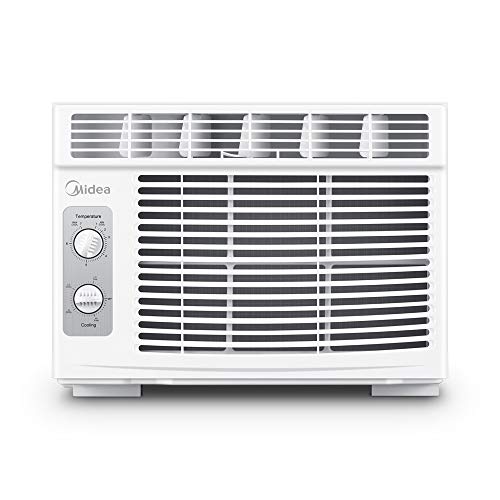


Complete Guide to Megawatt (MW) and Kilowatt (kW)
Understanding Megawatt and Kilowatt Measurements
Both megawatt (MW) and kilowatt (kW) are units of power commonly used to measure electrical energy. A kilowatt (kW) is one thousand watts, while a megawatt (MW) is one million watts. These units are used to measure power generation, power consumption, and other electrical applications. While kilowatts are commonly used for smaller-scale electrical needs, megawatts are used for larger-scale power generation and consumption, such as for industrial, commercial, or grid-scale energy systems.
MW to kW Conversion Formula
The formula to convert megawatts (MW) to kilowatts (kW) is simple:
Power (kW) = Power (MW) × 1000
For example:
- 1 MW = 1000 kW
- 5 MW = 5000 kW
- 10 MW = 10,000 kW
Applications of MW and kW
Understanding the conversion between megawatts and kilowatts is important for a variety of applications in the energy sector. These measurements help in understanding the scale of power generation or consumption, from individual appliances to large power plants and national energy grids.
Residential Use
In residential settings, kilowatts (kW) are used to measure power consumption. For example, household appliances like air conditioners, heaters, and refrigerators are typically rated in kilowatts. However, when considering renewable energy generation, such as solar panels or wind turbines, megawatts (MW) may be used to measure the scale of power generation. For instance, a small residential solar panel system may generate 5 kW, whereas a large solar farm could generate several megawatts of power.
Commercial Use
In commercial and industrial settings, megawatts (MW) are used to measure large-scale power consumption and generation. For example, large manufacturing plants or office buildings may consume power in the range of megawatts. When looking at power generation, power plants often produce energy measured in megawatts, ranging from a few MW in smaller plants to hundreds or even thousands of MW in large-scale facilities.
Energy Efficiency and Operational Costs
Converting between megawatts and kilowatts is also useful when evaluating energy efficiency and operational costs. Understanding how much power is being consumed (in kilowatts) over a certain period (in hours) allows for the calculation of energy consumption (in kWh). This can help estimate electricity costs and evaluate the efficiency of different systems.
Example Calculation for Operational Cost
To calculate the operational cost of a system based on power consumption in megawatts, you first convert MW to kW, then multiply by the number of hours the system operates and the cost per kWh. For example, a 5 MW system operating for 10 hours would consume:
Power Consumption (kW) = 5 MW × 1000 = 5000 kW
Then, you can calculate the energy consumption (kWh) and the operational cost based on the local electricity rate:
Energy Consumption (kWh) = 5000 kW × 10 hours = 50,000 kWh
Cost = 50,000 kWh × $0.13/kWh = $6,500/day
FAQ
General Conversion
Q: How do I convert MW to kW?
A: Multiply the number of megawatts by 1000 to get the equivalent kilowatts. For example, 5 MW = 5 × 1000 = 5000 kW.
Q: What is the difference between MW and kW?
A: MW (megawatt) is used for larger power generation systems and is equivalent to 1,000 kilowatts (kW). Kilowatts are typically used for smaller-scale energy consumption, such as household appliances, while megawatts are used for large-scale power generation, such as power plants.
Usage and Sizing
Q: What power consumption (kW) is typical for an air conditioner?
A: Residential air conditioners typically consume between 1 kW and 6 kW depending on their size and cooling capacity. Commercial air conditioners can use much larger amounts of power, measured in megawatts for large-scale systems.
Q: How can I calculate the power consumption of a power plant?
A: A power plant’s energy production is typically measured in megawatts (MW). To calculate its energy output in kilowatts (kW), simply multiply the MW by 1000. For example, a 100 MW plant produces 100,000 kW.
Energy and Cost
Q: How can I estimate the operational cost of an HVAC system?
A: Multiply the system’s power consumption (in kW) by the number of hours it runs and the cost per kWh. Example: A 5 kW system running for 8 hours at $0.13/kWh would cost:
Cost = 5 kW × 8 hours × $0.13/kWh = $5.20/day
Q: Does a higher MW rating always mean higher energy consumption?
A: Generally, yes. A higher MW rating means the system is capable of generating or consuming more power. However, energy efficiency plays a key role. Systems with higher efficiency can generate or consume more power with lower energy waste.
Technical
Q: What is the relationship between MW and kWh?
A: MW measures the power output or consumption, while kWh measures the total energy used over time. To calculate kWh, multiply the MW value by the number of hours of operation. Example: 1 MW for 5 hours = 5 MWh = 5000 kWh.
Q: Is the MW to kW ratio fixed?
A: Yes, the ratio is fixed. 1 MW = 1000 kW, which is a simple multiplication factor used for all conversions between MW and kW.