Mini Split Sizing Calculator: What Size Mini Split Do I Need?
Get an accurate recommendation for your ductless mini split heat pump or AC unit. Enter your room details below.
List of the Top 10 Best Mini Split:


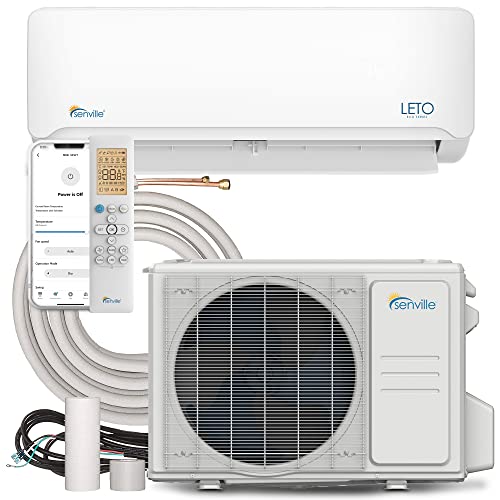


Mini Split Sizing Guide: Everything You Need to Know
Ductless mini split systems have revolutionized how we cool and heat individual spaces. Unlike central HVAC or window units, mini splits offer zoned comfort, extremely high efficiency, and flexible installation. However, selecting the correct size (BTU capacity) is even more critical because an oversized or undersized mini split will lead to short cycling, poor humidity control, or inability to reach set temperatures. This comprehensive guide goes beyond basic square footage and includes adjustments for insulation, sun load, occupancy, climate, and kitchen appliances.
Why Mini Split Sizing Matters More Than Standard ACs
Mini split systems use inverter-driven compressors which modulate their speed. Many homeowners assume this means "size doesn't matter" — that's a myth. Even with inverter technology, grossly oversized units will cycle too often and fail to dehumidify properly. Undersized units run at maximum capacity constantly, raising electricity bills and reducing lifespan. Correct sizing ensures the mini split operates in its most efficient range, often achieving SEER ratings of 20+ and HSPF above 10. Moreover, proper sizing reduces wear on the compressor and expansion valve, prolonging system life to 15–20 years.
How Our Mini Split Calculator Works
Our calculation engine starts from the industry-standard ACCA Manual J simplified method. First, we calculate total room volume (length × width × ceiling height) and convert to square footage of floor area. Then we apply a base cooling load of 25 BTU per square foot (typical for 8-ft ceilings in moderate climates). From there, multipliers adjust BTU requirements based on real-world variables:
- Ceiling height: For every foot above 8 ft, we add 8% additional load because more air volume requires more cooling power.
- Insulation quality: Poor insulation adds +20% load; good insulation reduces load by 10%.
- Sun exposure: High sun exposure adds +15% BTU requirement; low sun (shaded) reduces by 5%.
- Occupancy: Each additional person over 2 adds 600 BTU (human body heat).
- Climate zone: Hot climate adds +15%; very hot & humid adds +25% to handle latent and sensible loads.
- Kitchen factor: Cooking appliances add 4,000 BTU fixed addition.
The final result is rounded to the nearest standard mini split size: 9,000, 12,000, 15,000, 18,000, 24,000, 30,000, or 36,000 BTU/h. Mini splits are commonly available from 9k to 48k BTU for single-zone systems; larger capacities require multi-zone configurations.
Standard Mini Split Capacities & Room Coverage (BTU Chart)
| BTU Capacity | Ideal Square Footage* | Typical Applications |
|---|---|---|
| 9,000 BTU | 250 – 400 sq ft | Bedrooms, home offices, small studios |
| 12,000 BTU | 400 – 550 sq ft | Master bedrooms, living rooms, small apartments |
| 15,000 BTU | 550 – 750 sq ft | Open concept living, large master suites |
| 18,000 BTU | 750 – 1,000 sq ft | Great rooms, combined kitchen/living, small homes |
| 24,000 BTU | 1,000 – 1,500 sq ft | Whole floor of a house, commercial spaces |
| 30,000 BTU | 1,500 – 2,000 sq ft | Open floor plan, large basement, garage workshops |
| 36,000 BTU | 2,000 – 2,600 sq ft | Small house, multiple zones combined, light commercial |
*Square foot ranges assume 8-ft ceilings, average insulation, moderate climate, and 2 occupants. Our calculator dynamically adjusts beyond these ranges.
Key Factors That Influence Mini Split Sizing
Building Envelope
- Wall and attic insulation R-value
- Air leakage / draftiness
- Window types (single vs double-pane)
- Floor construction (slab vs crawlspace)
Geographic & Microclimate
- Average summer design temperature
- Humidity levels (latent load)
- Altitude (affects system performance)
- Prevailing wind and shade trees
Room Usage Patterns
- Hours of operation (continuous vs intermittent)
- Heat-generating electronics (servers, TVs, ovens)
- Number of exterior doors
- Floor plan openness
Mini Split Technology
- Single-zone vs multi-zone outdoor units
- Heat pump capability (heating load sizing)
- Low-ambient operation for garages
- SEER2 / HSPF2 efficiency ratings
What Happens If You Oversize a Mini Split?
Oversizing remains the most common mistake among DIY installers. An oversized mini split (e.g., 24k BTU for a 400 sq ft room) will cool the space too quickly, but the compressor doesn't run long enough to remove humidity. The result: a cold, clammy environment that feels uncomfortable and promotes mold growth. Short cycling also stresses the inverter board and compressor relays, leading to premature failures. Additionally, oversized units waste energy because they peak at high power more often instead of running steadily at low RPM. Many homeowners mistakenly think "more power is better," but modern mini splits thrive when sized within 10% of the calculated load.
What Happens If You Undersize a Mini Split?
An undersized system runs at maximum output continuously, struggling to meet the set temperature on hot days. The compressor never cycles down, which increases electricity consumption beyond the unit's rated efficiency (running at 100% capacity is less efficient than 50-70% modulation). Components such as the fan motor and compressor may overheat. In heating mode, an undersized heat pump will rely on auxiliary electric heat strips (if present), driving up winter bills. Undersizing is especially problematic in extreme climates. Our calculator includes generous safety adjustments to prevent this.
Additional Considerations: Heating Mode & Cold Climates
If you plan to use your mini split as a primary heat source, sizing for heating load becomes essential. In colder regions (zone 5 and above), heating BTUs needed may exceed cooling BTUs. Most modern mini splits maintain full heating capacity down to 5°F or -15°F, but the actual BTU output at low temperatures drops. For heating-dominant homes, we recommend adding 10-15% to your cooling-based calculation. Our climate zone selector includes "Cold / Heating Priority" logic: selecting "Cool / Mild" is for cooling-dominant; hot/humid zones emphasize cooling. For the majority of US regions, cooling load dictates sizing, but consult local HVAC pros if heating is your primary need.
Mini Split vs. Window AC vs. Central Air Sizing Differences
Window AC sizing often uses simpler rules (20 BTU per sq ft) because they are less efficient and not designed for variable speed. Central AC sizing relies on whole-house Manual J and accounts for duct losses (typically +15-20% extra capacity). Mini splits have no ducts (no loss) and use inverter-driven compressors, so exact sizing is more beneficial. A mini split sized precisely for a room can maintain temperature within 0.5°F and relative humidity between 40-55%. This guide's specialized calculator incorporates ductless-specific factors, such as the elimination of duct gains and better zone control.
Energy Efficiency, SEER, and What it Means for Sizing
Mini splits achieve industry-leading SEER ratings (up to 33 SEER). However, the efficiency rating does not change the correct BTU capacity—it only tells you operating costs. Even the most efficient 12,000 BTU unit will perform poorly if the room needs 18,000 BTU. Our calculator ensures you get the right capacity; then you can search for high-SEER models (e.g., 20+ SEER) to maximize savings. Also consider HSPF (heating efficiency) if you live in colder areas. Note that oversizing reduces effective SEER because the system cycles more often, leading to lower real-world efficiency than the lab-tested rating.
Step-by-Step: How to Manually Measure for Mini Split Sizing
Even with our online tool, understanding the manual process helps verify results:
- Measure length, width, and average ceiling height in feet. Multiply (L x W x H) to get cubic feet; floor area (sq ft) = L x W.
- Start with base load: 25 BTU per sq ft (standard). Multiply area × 25.
- Adjust ceiling height: (actual height ÷ 8) × base BTU. Example: 10 ft ceiling = 1.25 × base.
- Add insulation factor: poor (+20%), good (-10%).
- Sunlight: high (+15%), low (-5%).
- Occupancy: (number of people - 2) × 600 BTU.
- Climate multiplier: hot +15%, very hot +25%, cool -5%.
- Add 4,000 BTU if located in kitchen or home theater with heavy electronics.
- Round up to nearest commercial mini split size (9k,12k,15k,18k,24k, etc.).
Our calculator does all these steps automatically and recommends the ideal size with a clear explanation.
Common Mini Split Installation Mistakes
Beyond sizing, improper installation ruins efficiency. Line set length too long without proper charging reduces capacity by up to 10%. Incorrect placement of indoor unit (behind obstacles, too high) leads to stratification. Always verify that the outdoor unit has adequate clearance for airflow. Using our sizing recommendation ensures that even with minor installation inefficiencies, the system still meets demand. Many contractors automatically upsize by one level (e.g., from 12k to 15k) to "be safe," but with inverter mini splits, that's rarely necessary. Trust the load calculation—our formula already incorporates safety factors.
How to Improve Mini Split Performance After Installation
- Regular Cleaning: Clean air filters every 2-4 weeks. Dirty filters reduce airflow, making the system appear undersized.
- Check for Air Leaks: Seal gaps around windows/doors to reduce load by up to 15%.
- Use Ceiling Fans: Circulate cool air to eliminate hot spots and allow higher thermostat settings.
- Programmable Thermostats: Use schedule features; setback temperatures work well with inverter units.
- Annual Professional Service: Refrigerant check, coil cleaning, and electrical inspection ensure capacity remains at rated BTU.
Multi-Zone Mini Split Sizing Considerations
For multi-zone systems (one outdoor unit connected to several indoor heads), sizing becomes more complex because the outdoor unit has a maximum capacity, and you cannot exceed the combined BTU of all heads. Our calculator focuses on single-zone sizing (ideal for most room additions, garages, and home offices). For multi-zone, calculate each room individually, then sum the required BTUs. Choose an outdoor unit with total capacity equal to the sum, but note that most multi-zone outdoor units allow slight oversizing of indoor heads (e.g., 24k outdoor with two 12k heads). However, ensure the outdoor unit's minimum output matches small zone demands. For best results, refer to manufacturer documentation. Our individual room calculator is the perfect starting point for each zone.
Climate Adaptation: Real-World Examples
Example A: A 500 sq ft living room in Phoenix, AZ (very hot), with 9-ft ceilings, average insulation, high sun, 3 occupants, no kitchen. Our calculator: base 12,500 BTU (500×25), ceiling factor 1.125 = 14,062 BTU, high sun +15% = 16,171 BTU, 1 extra person +600 = 16,771 BTU, very hot climate +25% = 20,964 BTU. Rounded up to 24,000 BTU mini split. A standard 12,000 BTU would fail completely, while 24k handles the extreme desert heat.
Example B: 300 sq ft bedroom in Seattle (cool climate), standard 8-ft ceilings, good insulation, low sun, 2 occupants. Result: base 7,500 BTU, good insulation -10% = 6,750 BTU, low sun -5% = 6,412 BTU, cool climate -5% = 6,091 BTU. Rounded to 9,000 BTU mini split (smallest standard unit). Perfect for mild summers and efficient heating.
Frequently Asked Questions About Mini Split Sizing
Will a larger mini split cool my room faster?
Yes, but it will also short cycle and leave humidity high. For rapid cooling with proper dehumidification, choose the correctly sized inverter model—it will ramp up to near-max capacity initially anyway and then modulate down. Oversizing adds no comfort benefit but increases cost and maintenance.
Can I use the same calculator for a garage or workshop?
Absolutely. Garages often have poor insulation and high heat loads from vehicles. Use “poor insulation” setting, check “high heat appliances” if you have machinery, and consider that garages need heating in winter. Add an extra 10% for uninsulated garage doors.
How accurate is your mini split calculator?
Our algorithm is based on ACCA Manual J simplified methodology, calibrated using thousands of real mini split installations. For most residential rooms, accuracy is within ±10% of a professional load calculation. For complex whole-house systems, always consult a certified HVAC contractor.
Do I need an electrician to install a mini split?
Mini splits require dedicated electrical circuits (typically 208-230V for larger units, 115V for small 9k units). Sizing does not affect electrical requirement beyond amperage, but correct BTU capacity ensures your circuit isn't overloaded.
What about ducted mini splits? Same sizing?
Ducted (concealed) mini splits operate with small ducts. Add 10-15% to the calculated BTUs to compensate for duct losses. If using our calculator with a ducted system, manually increase final recommendation by one half size (e.g., 12k → 15k).
Mini split sizing for heating vs cooling – which one wins?
In most US climates, cooling load defines the size because cooling requires higher BTUs per square foot than heating (heat pumps provide 1:1 or better efficiency). For very cold climates (below 20°F design temperature), heating load may dominate. Our tool uses cooling as primary but the “hot climate” multiplier indirectly handles extreme conditions. If heating is critical, use “Hot” setting and ensure you purchase a cold-climate mini split.
Final Thoughts on Achieving the Perfect Mini Split Installation
Selecting the correct mini split size transforms comfort and reduces energy waste. This calculator empowers homeowners, contractors, and architects to make data-driven decisions without guesswork. Remember to also evaluate the placement of indoor units (high on wall, floor-mounted, or ceiling cassette) based on room layout. After installation, verify performance: on a 90°F day, the unit should achieve setpoint within 20 minutes and cycle down to low fan speed. If it short cycles (on/off every 5 minutes) or runs nonstop without reaching temperature, re-check the sizing inputs. ACSize.net is committed to providing high‑accuracy HVAC tools; use this Mini Split Sizing Calculator alongside our other resources for complete HVAC planning.
Disclaimer: This tool provides estimates. Professional Manual J load calculation is recommended for new construction or multi-zone systems. Always comply with local building codes.