BTU to W Calculator
Convert BTU (British Thermal Units) to watts (W) with our easy-to-use calculator. This tool helps you assess the power consumption of your air conditioning system in watts.
List of the Top 10 Best AC:
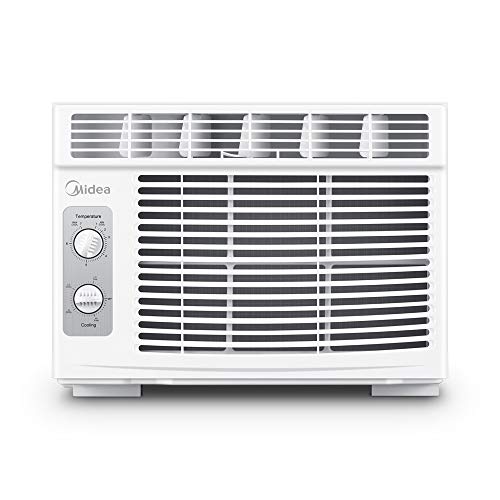


Complete Guide to BTU and W
Understanding BTU and W Measurements
Energy can be measured in multiple units, with BTU (British Thermal Units) and watts (W) being commonly used in HVAC systems. Knowing the conversion between these units helps you better understand the energy usage and efficiency of your air conditioning system. While BTU measures energy, watts measure power — the rate at which energy is consumed or transferred.
BTU to W Conversion Formula
Converting BTU to watts is simple. To convert BTU to watts, multiply the BTU value by 0.293071. The formula is:
Power (W) = BTU × 0.293071
For example:
- 12,000 BTU = 3,516.85 W
- 24,000 BTU = 7,033.69 W
- 36,000 BTU = 10,550.53 W
Applications of BTU and W
Understanding how to convert BTU to watts is important for evaluating the power consumption of HVAC systems, comparing the energy efficiency of different systems, and understanding the electrical load of cooling or heating units.
Residential Use
For residential purposes, air conditioners typically range from 12,000 to 60,000 BTU, which corresponds to a power rating between 3,516 W and 17,583 W. This is essential when selecting the appropriate air conditioner for your home, as you need to match the cooling power to the size of your living space.
Commercial Use
Commercial air conditioning systems can exceed 100,000 BTU and require a power rating well over 29,000 watts. These units are often used to cool larger buildings or commercial spaces and require high power consumption to maintain temperature control over large areas.
Electricity Consumption
Once you convert your air conditioning unit's BTU rating to watts, you can estimate the power consumption in terms of electricity usage. Most electrical companies measure electricity consumption in kilowatt-hours (kWh), and converting your system's power from BTU to watts will help you assess the energy usage more accurately.
Example Calculation for Operational Cost
To calculate the operational cost of an air conditioning system, multiply the wattage by the number of hours it runs and the local cost per kilowatt-hour (kWh). The formula is:
Cost = W × Hours ÷ 1000 × Cost per kWh
If you run a 3,516 W air conditioner for 8 hours a day, and your electricity cost is $0.13 per kWh, the daily cost of running the air conditioner would be:
Cost = 3,516 × 8 ÷ 1000 × 0.13 = $3.66/day
FAQ
General Conversion
Q: How do I convert BTU to W?
A: Multiply the BTU value by 0.293071 to get the equivalent watts (W). For example, 24,000 BTU × 0.293071 = 7,033.69 W.
Q: Why is BTU used in the U.S. and W used elsewhere?
A: BTU is part of the Imperial system, commonly used in the United States, while watts (W) are part of the International System of Units (SI) and are used globally. Both units are used to measure energy, but they belong to different measurement systems.
Usage and Sizing
Q: What wattage should my air conditioner have?
A: The ideal wattage depends on the size of your room and your cooling needs. As a general guide:
- Up to 20 m²: 2,000 W (≈6,800 BTU)
- 20–40 m²: 3,000–4,500 W (≈10,200–15,300 BTU)
- 40–60 m²: 5,000–7,000 W (≈17,000–23,900 BTU)
Q: Can a higher wattage system be more efficient?
A: Not necessarily. An oversized unit may short-cycle, consuming more energy, which leads to inefficiency. Proper sizing ensures optimal performance and efficiency.
Energy and Cost
Q: How can I estimate the cost of running an AC in W?
A: Multiply the wattage by the number of hours you use the AC and the cost per kWh. Example: 3,516 W × 8 hrs ÷ 1000 × $0.13/kWh = $3.66/day.
Q: Does higher BTU always mean higher power consumption?
A: Generally yes, but more efficient models with higher SEER (Seasonal Energy Efficiency Ratio) ratings may use less power while providing the same or higher BTU output.
Technical
Q: What is the difference between watts (W) and kilowatts (kW)?
A: Watts (W) measure the rate of energy consumption, while kilowatts (kW) are a larger unit of power. 1 kW = 1,000 W.
Q: Is the BTU to W ratio fixed?
A: Yes, 1 BTU/hr = 0.293071 W. This conversion factor is fixed and applicable for all systems.